NC Farmworker Health Program

Search NC Farmworker Health Program

Menu
  • About
    • About NCFHP
    • Our Work
    • Staff
    • Board
    • Sites We Fund
    • Collaborations
    • HRSA Funding Acknowledgement
    • Close
  • Farmworker Health
    • About Farmworkers
    • Farmworker History
    • Farmworker Health Facts
    • 340B Program
    • Close
  • Resources
    • Outreach
      • FHASES
      • Outreach Forms
      • Outreach Manual
      • Finding Workers
      • Patient Education Materials
      • Apps
    • Trainings
      • Training and Events Calendar
      • May Outreach Orientation
      • Health Education Modules
    • Clinicians
      • Pesticide Poisoning
      • Make your clinic farmworker friendly
    • Directories
      • Farmworker Health Clinic Map
      • NCFHP Behavioral Health Services Directory 2020
      • Farmworker Organizations
      • 340B Formulary
    • Research
      • Research Articles
      • 2025 Hurricane Recovery and Resiliency Needs Assessment Results: Sampson County
    • Close
  • News
    • NCFHP BEHAVIORAL HEALTH SERVICES REQUEST FOR APPLICATIONS (RFA) FOR 2026-2028
    • Caring for All of North Carolina’s Agricultural Community
    • The NC State Extension Farm Safety Project: Measuring Change through Collaboration
    • More News…
    • Close
  • Get Involved
    • Volunteer Opportunities
    • Employment Opportunities
    • Close

About Farmworkers

Farmworker Facts

Learn about Farmworker Health
Facts and information about the safety and healthcare access challenges faced by North Carolina farmworkers and their families.

National Agricultural Workers Survey (NAWS).
National survey of U.S. crop workers that provides data on demographics, employment, health, housing, income, and working conditions of the agricultural workforce

 Farmworkers’ Vital Contribution to North Carolina’s Economy
Overview of the role farmworkers play in North Carolina’s agricultural economy.

Facts about NC Farmworkers
Overview of North Carolina farmworkers, including demographics, employment, health, and economic conditions.

United States Farmworker Factsheet 
Overview of farmworker demographics, working conditions, wages, and employment trends in the United States.


Increasing Broadband Access for Agricultural Workers in NC (English PDF)
Fact sheet highlighting broadband access challenges among agricultural workers in North Carolina, including internet availability and efforts to improve digital access.

Aumentar el Acceso a la Banda Ancha para los Trabajadores Agrícolas en Carolina del Norte (Español PDF)
Descripción general del acceso a la banda ancha, las barreras de conectividad y los esfuerzos de inclusión digital para los trabajadores agrícolas en Carolina del Norte.

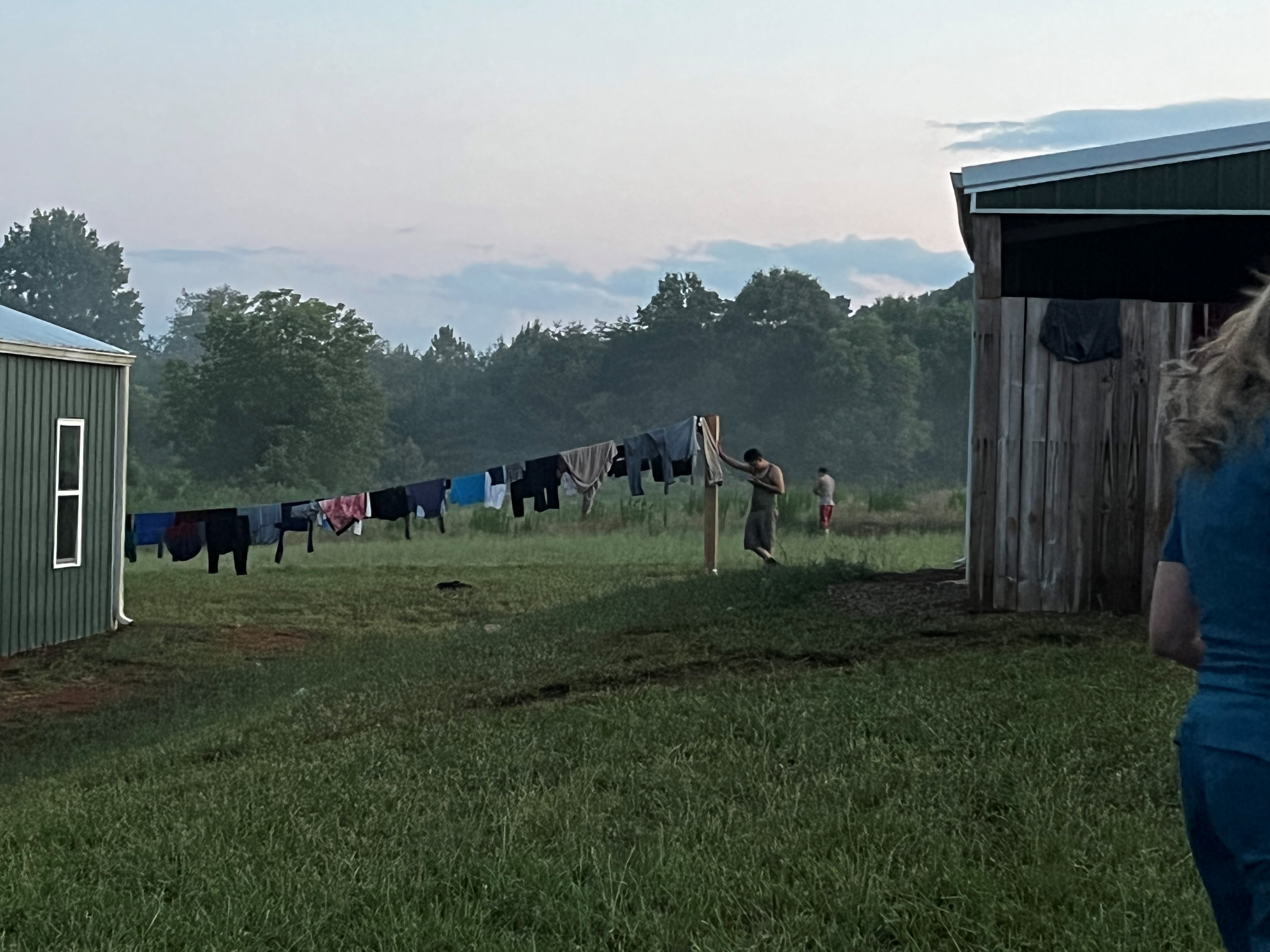
Clothes hang on a line between buildings at a farmworker housing site with people nearby.

The farmworker community is diverse, made up of various cultures, ethnic groups, genders and ages. They work long hours, sometimes under adverse weather conditions, to prepare, cultivate and till the soil, plant and harvest crops, and process crops for market or storage.

Farmworkers work in fields, nurseries, greenhouses and reforestation. They may harvest fruit and vegetable crops, wild plants and Christmas trees. They may be migrant, H-2A (with a temporary work visa), or seasonal workers.

Migrant and H-2A Workers

Migrant workers are defined as individuals who are required to be absent overnight from a permanent place of residence for the purpose of seeking employment in agricultural work and who have been so employed within the last 24 months. Migrant farmworkers may travel from other states, alone or with their families, or arrive from other countries as a guest worker with an H-2A visa.

Migrant farmworkers recruited from other countries to do agricultural work in the United States under the H-2A program are known as H-2A guest workers. The U.S. Department of Labor makes available temporary visas under the H-2A Agricultural Program to allow farmers who anticipate a shortage of domestic workers to bring non-immigrant, foreign guest workers legally to the United States to perform agricultural work for a season. North Carolina is one of the largest users of this type of temporary agricultural visa with between 14,000 and 17,000 H-2A workers annually.

The North Carolina Growers Association is one of the oldest institutions to bring H-2A workers to the state. In recent years, more entities like the Growers Association are emerging to provide workers to North Carolina farmers. Migrant farmworkers who work for the same grower year after year may bring family members and friends, as the labor needs demand.

Some farmworkers come with and work for a crew leader—an individual who works independently to recruit workers from other countries or states to work as farm laborers. These individuals often serve as a middleman between the farmworker and the farmer, providing transportation, labor, housing and other services for a fee. Crew leaders must have a license to employ farmworkers.

To learn more about the H-2A Agricultural Visa Program visit the US Department of Agriculture.

Seasonal Workers

Seasonal farmworkers are individuals who are employed in agricultural work but do not move from their permanent residence to seek agricultural work. They may work in agriculture at least 50% of their time and also have other sources of employment during the non-agricultural season.

Article: Migrant Farm Workers: Our Nation’s Invisible Population by Eduardo Gonzalez, Jr.

NC Farmworker Health Program, Office of Rural Health · 1915 Health Services Way · Raleigh NC 27607 · Tel: 919-527-6440 · Fax: 919-733-2981
Copyright © 2026 NC Farmworker Health Program · All Rights Reserved · Website by Tomatillo Design